

Hemorrhoid Banding: Who Needs It, What to Expect and Alternatives
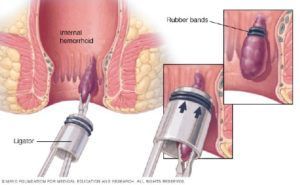
Hemorrhoid banding, or rubber band ligation, is an outpatient treatment for internal hemorrhoids that do not improve with home care. A small rubber band is placed around the base of the hemorrhoid, which then dries up and falls off. It does not suit everyone, so the decision should be made with your gastroenterologist.
Who May Need Hemorrhoid Banding?
Many people find relief with home care such as cold compresses, sitz baths, a high-fiber diet, over-the-counter topical products and oral pain relievers. A doctor may also suggest creams or ointments containing witch hazel, hydrocortisone or lidocaine for pain and itching.
When hemorrhoids do not respond, they can become itchier or more painful and may begin to bleed. Persistent bleeding or pain may make a person a candidate for banding. It is an option for internal hemorrhoids only, which form on the lining of the rectum and anus, and not for external hemorrhoids.
How to Prepare
- Tell your doctor about all medications, over-the-counter drugs and supplements you take. They can advise which ones to pause before the procedure.
- Follow the instructions about eating and drinking. You will usually be asked to avoid food and drink for several hours beforehand.
- Ask whether you will need general anesthesia.
- Plan for someone to accompany you and, ideally, to help you for the first days afterward.
What to Expect During the Procedure
Banding is a relatively simple outpatient procedure, so you will usually go home the same day. It often takes place in a hospital but can also be done in the doctor's office or another outpatient setting. The rectum is typically numbed with local or topical anesthesia. General anesthesia may be used if the hemorrhoids are causing significant pain or if several need banding.
The doctor inserts an anoscope, a lighted tube that lets them see and reach the hemorrhoid, and passes a small instrument through it to place a rubber band around the base of the hemorrhoid. This is repeated for each hemorrhoid. The whole procedure usually takes only a few minutes, depending on how many hemorrhoids are treated.
Recovery
After banding, the hemorrhoids dry up and fall off, which can take a couple of weeks. Many people do not even notice when it happens. Possible effects afterward include:
- Swelling or pain in the abdomen
- Extra gas
- Constipation
Some bleeding can be normal, but if it does not clear within a day or two, contact your doctor. Your doctor may recommend or prescribe a laxative to help prevent constipation and gas.
How Well Does It Work?
A study in the journal Diseases of the Colon & Rectum found that banding worked for about 8 in 10 people. Up to 1 in 10 people may still need surgery to remove their hemorrhoids afterward.
Risks and Complications
Side effects are not very common, but reported ones include bleeding from the anus, severe pain that does not respond to medication, infection in or around the anus, hemorrhoids that come back, and problems urinating. Tell your doctor if you notice any of these.
Alternatives to Banding
- Sclerotherapy: a chemical is injected into the hemorrhoid to cut off its blood flow. It often needs several visits, and the hemorrhoids may return.
- Electrocoagulation or infrared coagulation: heat from an electric current or infrared light creates scar tissue. Hemorrhoids often come back after these procedures.
- Surgical removal: it can be effective, but it carries a higher risk of complications than the other treatments.
In Summary
Banding is usually an effective way to treat internal hemorrhoids. It is quick, though some people find it uncomfortable. Because it is often more effective than some alternatives and usually needs just one visit, it is worth discussing with your doctor. You can also read our overview of hemorrhoid treatment at Gastro SB and our guide to hemorrhoid types, grades and treatment options. To book a consultation with Dr. Erick Alayo in Chula Vista, call (619) 382-3315.
Source: adapted from a medically reviewed patient-education article on hemorrhoid banding (reviewed by Saurabh Sethi, M.D., MPH), which cites a study in Diseases of the Colon & Rectum; rewritten in our own words. For educational purposes only; it does not replace a medical evaluation.
Gastro SB Clinic offers comprehensive treatment for a wide range of gastrointestinal and nutritional conditions.