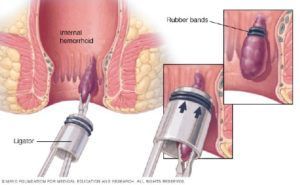


Hemorrhoid Banding (Rubber Band Ligation): How It Works
Hemorrhoid banding, also called rubber band ligation, is a minimally invasive procedure that a doctor can perform in the office. A small elastic band is placed around the base of an internal hemorrhoid, cutting off its blood supply so the tissue shrinks and falls away on its own, usually within about a week.
Why Hemorrhoids Happen
Hemorrhoids are swollen veins in the lower rectum and anus. According to the Mayo Clinic, almost three out of four adults will have them at some point. They develop when too much pressure builds in the veins of the rectal area. Common contributors include:
- Straining during bowel movements
- Sitting on the toilet for long periods
- Pregnancy
- Obesity
- Recurring constipation or diarrhea
- Not eating enough fiber
The risk rises between ages 45 and 65, but hemorrhoids can appear at any age. Internal hemorrhoids form inside the lower rectum and may cause bleeding, itching, swelling or soiling. External hemorrhoids form under the skin around the anus and can cause pain, itching and bleeding. It is possible to have both types at once.
How Does Hemorrhoid Banding Work?
The doctor uses a device called a ligator to place a tiny elastic band around the base of the hemorrhoid. With its blood supply cut off, the hemorrhoid withers and detaches in roughly a week. The surrounding tissue forms a small scar as it heals, which helps keep hemorrhoids from returning in the same spot.
When Might a Gastroenterologist Recommend It?
Banding may be considered for hemorrhoids that are prolapsed or that keep causing symptoms such as pain, bleeding, itching, swelling or soiling, especially when home care and over-the-counter creams have not provided lasting relief. Hemorrhoids that are left untreated can become itchier or more painful over time.
How Successful Is It?
Reported success rates for banding generally fall between 70% and 97%, depending on the technique used and the grade of the hemorrhoid. According to an article in the World Journal of Gastrointestinal Surgery, rubber band ligation is one of the most commonly used and cost-effective treatments for internal hemorrhoids.
A Brief History
People have treated hemorrhoids for thousands of years. Hippocrates described tying hemorrhoids with woolen thread until they dropped off. Modern banding was first described by Paul C. Blaisdell in the 1950s, based on the idea that internal hemorrhoids are easy to reach and have few pain-sensitive nerve endings. In the 1960s, J. Barron introduced a metal ligator that grasps the hemorrhoid with forceps before placing the band. Later devices, including suction-based ligators, were developed to make the procedure easier and more comfortable.
Traditional Versus Suction Banding
In traditional banding, the doctor grasps the hemorrhoid with forceps and pulls it away from the anal wall before placing the band. The procedure takes about five to ten minutes and recovery can take up to three days. Pain and bleeding afterward are not unusual, and doctors sometimes prescribe pain medication. According to the World Journal of Gastrointestinal Surgery, pain is one of the most common complications of the traditional technique and occurs in about 25% to 50% of patients. Different devices and techniques can lead to different results, so it is worth asking your doctor which method will be used.
Learn More
To compare banding with other options, see our hemorrhoid treatment page and our guide to hemorrhoid types, grades and treatment options. If you live in the San Diego or Chula Vista area and have hemorrhoid symptoms that do not go away, you can schedule a consultation with Dr. Erick Alayo at Gastro SB by calling (619) 382-3315.
Source: general educational information on rubber band ligation, including figures attributed to the Mayo Clinic and the World Journal of Gastrointestinal Surgery, rewritten in our own words. For educational purposes only; it does not replace a medical evaluation.
Gastro SB Clinic offers comprehensive treatment for a wide range of gastrointestinal and nutritional conditions.